


Plant in layers
Combine tall background plants with broad leaves and sheltered spaces at different heights.
Couldn't load pickup availability
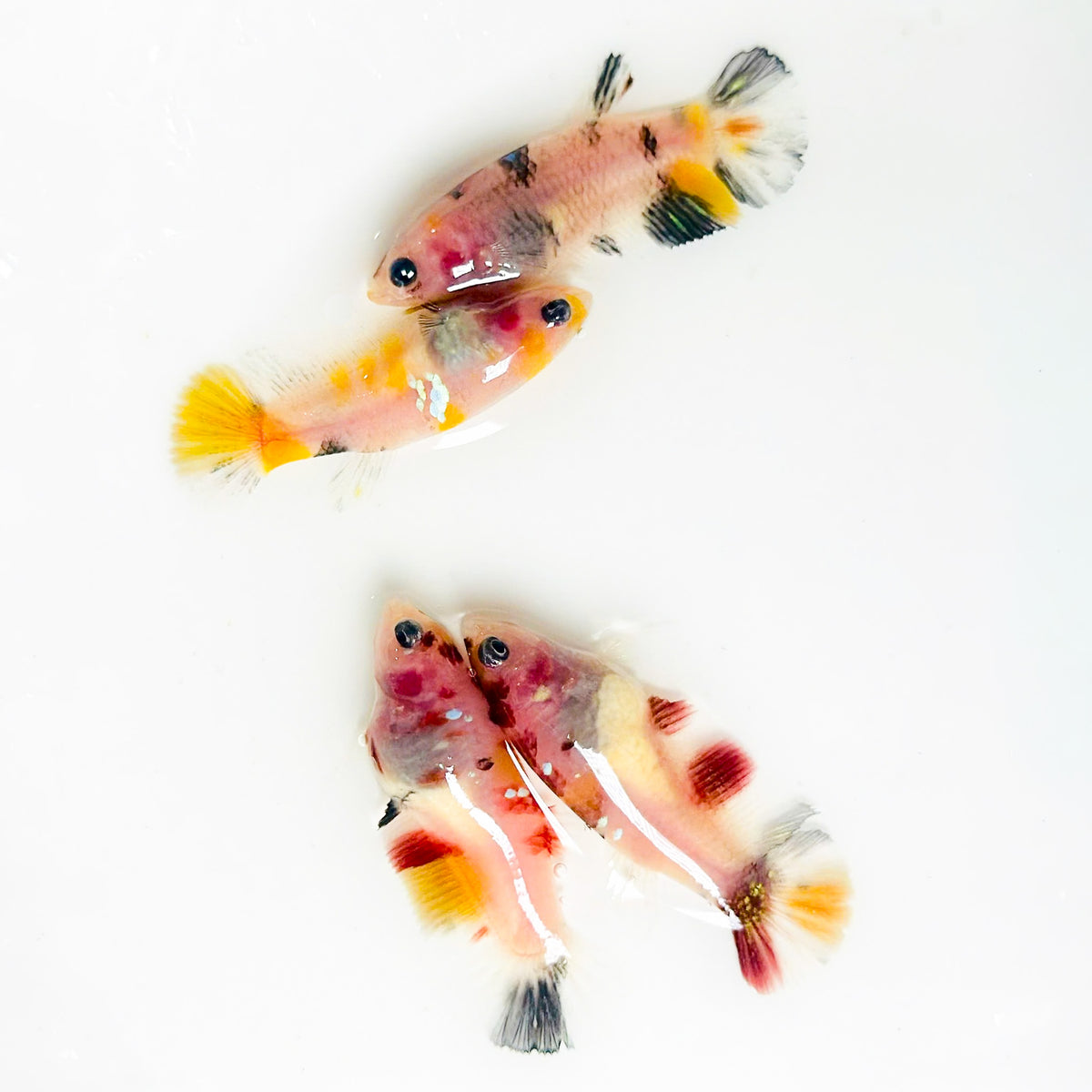
Meet our Baby Koi Nemo Sorority Betta Fish — a special group of young female Bettas that have been born and raised together from an early age. These juvenile females are approximately 2–2.5 months old and are still developing their adult colors, patterns, and personality.
At this young stage, many of the fish may show softer, lighter, or less-developed coloration than mature Koi Nemo Bettas. As they continue to grow, their patterns can become increasingly vibrant with combinations of red, orange, yellow, black, white, blue, and metallic highlights.
One of the most exciting parts of raising young Koi Nemo Bettas is watching their appearance change over time. A fish that looks simple today may develop dramatically different colors and markings as it matures, making every group a unique growing collection.
Koi Nemo Bettas are known for their changing coloration. Because these females are still young, their current appearance should not be considered their final adult color.
As they mature, you may notice:
This natural development is part of what makes young Koi Nemo Bettas so exciting to raise. No two fish will develop exactly the same way.
| Attribute | Details |
|---|---|
| 🐠 Variety | Koi Nemo Female Betta Fish |
| 👩 Gender | Female |
| 👶 Age | Approximately 2–2.5 Months Old |
| 🎨 Color | Developing Koi Nemo Multicolor |
| 🌈 Potential Colors | Red, Orange, Yellow, White, Black, Blue & Metallic Highlights |
| 🐟 Tail Type | Primarily Plakat / Short Tail |
| 🏡 Raised | Born & Raised Together |
| 😤 Temperament | Semi-Aggressive |
| 🍗 Diet | Carnivore |
| 🌡️ Temperature | 76°F – 82°F |
| 🌀 Water Flow | Gentle Flow Preferred |
| 🍽️ Recommended Food | Quality Betta Pellets, Brine Shrimp, Bloodworms & Daphnia |
These baby female Bettas have been raised together from a young age rather than being randomly combined as adults. Growing together can help the fish become familiar with the presence of other females.
However, female Bettas are still territorial fish, and being born and raised together does not guarantee that every individual will remain peaceful as it matures. Personalities can change with age, so proper sorority setup and regular observation remain essential.
For the best chance of maintaining a successful female Betta community, we recommend:
Because these are baby Koi Nemo Bettas, the fish you receive may have lighter colors or less-developed patterns than mature specimens shown in reference photos.
Color, pattern, and markings will vary from fish to fish and may continue changing significantly as the fish matures. This natural transformation is part of the Koi Nemo genetics and is one of the most exciting characteristics of this variety.
Adult coloration cannot be guaranteed because every individual develops differently.
🛒 Start young and watch the colors come alive. Our Baby Koi Nemo Sorority Betta Fish offer the unique experience of raising a group of young females that have grown together while watching their beautiful Koi Nemo colors develop month after month. 🌈🐠✨
A successful female Betta sorority requires more than simply placing several females together. Tank size, plant density, hiding areas, group size, introduction methods, and individual temperament all play important roles.
👉 Read our full guide:
Ultimate Guide: The Key to Successful Female Betta Sorority
This guide covers:
When properly planned and carefully monitored, raising a group of young female Bettas can be an incredibly rewarding part of the Betta-keeping hobby. 🌿🐠🌈
At Tropicflow, we strive to make the shipping process as affordable and convenient as possible for our customers. Our shipping rate starts as low as $25, and the more fish you purchase, the more you save on shipping fees. We encourage our customers to combine as many fish as possible in each order to take advantage of these cost-saving opportunities.
At Tropicflow, we take pride in shipping only the highest quality freshwater fish to our customers. Our fish are carefully selected for their excellent health, vibrant colors, and wide, full tails.
Tropicflow takes great pride in the quality of our products, and we proudly extend a 100% Live Arrival Guarantee for every shipment we dispatch. In the unfortunate event that any of the livestock or plants in your order do not survive upon arrival, we are dedicated to offering you a full refund in the form of store credit, covering the precise cost of the item, excluding shipping expenses. Your satisfaction is our commitment!


Their journey
From tiny fry to colorful female bettas, watch this group grow up side by side.
Give their next chapter a heavily planted home, stable water and daily care. Growing up together does not guarantee future compatibility.
Explore our female bettasA better habitat for every variety
Start with a heavily planted tank.
Dense planting gives female bettas places to rest, retreat and move out of sight. Prepare the habitat before introducing your group.
Combine tall background plants with broad leaves and sheltered spaces at different heights.
Use planted clusters and smooth hardscape to divide the tank into smaller, sheltered areas.
Keep swimming routes and access to the surface clear, even when planting densely.


Top and side views of a heavily planted sorority tank. Plant cover helps, but individual compatibility still matters.

Create their next home
Give your female bettas a habitat to explore, rest and retreat. Start building layers of plant cover with our Female Betta Sorority Plant Package.
Prefer to choose your own plants? Explore the collection
Everyday care, made clearer
From water quality to feeding, plan for the needs of every fish in your sorority.
Start with a fully cycled, heated aquarium with gentle filtration, dense planting and clear access to the surface. Use plant groups to break sightlines, test the water regularly and make partial water changes as needed. Observe every fish daily and keep separate housing ready if aggression develops.
Choose a plant bundle for your aquarium’s footprint and the areas you want to plant. Package size labels describe the plant bundle, not a recommended fish count or minimum sorority tank size. Keep swimming routes and access to the surface clear as plants grow.
A practical target for female bettas is:
Use a reliable test kit and dechlorinated replacement water. Keep conditions stable, avoid sudden adjustments and check that any tank mates share the same temperature and water requirements. Live plants support the habitat but do not replace filtration, testing or water changes.
Sometimes, but guppies are not a guaranteed match. Their bright colors and flowing fins can attract chasing or nipping. Consider the temperament of each betta, the space available and both species’ water needs. Avoid adding guppies to a sorority that already shows aggression, and separate fish if harassment occurs.
Explore our guppy collection and compare individual care requirements before choosing tank mates.
Peaceful Corydoras can be an option in a spacious, stable aquarium. Choose a species suited to your tank temperature and keep an appropriate group of its own kind. Provide a smooth substrate, open bottom space and sinking food that reaches them. Watch for bettas blocking access to food or chasing them.
Shrimp may be hunted, especially small shrimp and babies. Dense moss and hiding places offer cover but cannot guarantee their safety. Check the temperature and water needs of the shrimp species, and choose a separate shrimp tank if protecting a breeding colony is your priority.
Prepare a cycled, heated quarantine tank and review the arrival instructions before opening the bags. Dim the lights and match the temperature using the method appropriate for the shipping bag. Gently transfer each fish into clean tank water and discard the shipping water.
For fish shipped over long distances, avoid prolonged drip acclimation in opened shipping water: accumulated ammonia can become more toxic after opening. If water chemistry differs greatly, ask us for advice before arrival. Observe new fish in quarantine before introducing them to the sorority.
Offer a quality betta pellet as the staple, with occasional frozen foods such as daphnia or brine shrimp for variety. Feed small portions once or twice daily, following the food label and adjusting to each fish’s size and body condition. Offer only what they eat within about two minutes and remove leftovers.
In a sorority, feed at more than one spot and check that shy fish get their share.


Log in or create an account to use your points.